


Shri Hari Stotram is a devotional hymn in praise of Lord Hari, Lord Vishnu. The stotram presents him as the protector of the worlds, the destroyer of suffering, the companion of Lakshmi, and the one who removes fear from the heart of the devotee.
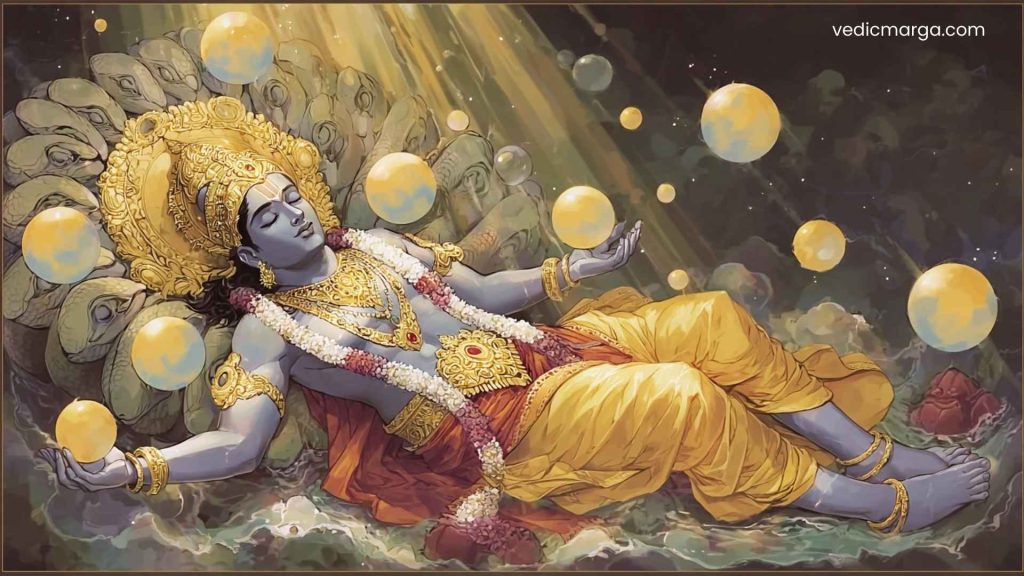
This hymn is often recited with bhakti, steadiness of mind, and surrender. Its verses praise the form, grace, strength, and protective nature of Shri Hari.
In this article
How to Recite
Shri Hari Stotram may be recited at any time, with particular benefit found in the morning hours (brahma muhurta) or during evening prayer. Facing east or north while reciting is traditional. The stotra can be chanted once or a fixed number of times (3, 7, 11, or 21 repetitions) as part of a personal practice. Clean hands, a clean space, and a focused mind are sufficient preparation.
 Watch the video
Lyrics, Transliteration, and Meaning
॥ Verse 1 ॥
Sanskrit
जगज्जालपालंकचत्कण्ठमालं।
शरच्चन्द्रभालंमहादैत्यकालं।
नभोनीलकायंदुरावारमायं।
सुपद्मासहायम्भजेऽहंभजेऽहं॥१॥
Transliteration (IAST)
jagajjālapālaṃ kacatkaṇṭhamālaṃ
śaraccandraphālaṃ mahādaityakālam
nabhonīlakāyaṃ durāvāramāyaṃ
supadmāsahāyam bhaje'haṃ bhaje'ham
Meaning
I worship Shri Hari — the protector of this world, whose garland shines around his neck, whose forehead glows like the autumn moon, who brings death to the mightiest of demons, whose body is the colour of the open sky, whose maya is beyond all measure, and whose eternal companion is Padma (Devi Lakshmi). I worship him. I worship him.
॥ Verse 2 ॥
Sanskrit
सदाम्भोधिवासंगलत्पुष्पहासं।
जगत्सन्निवासंशतादित्यभासं।
गदाचक्रशस्त्रंलसत्पीतवस्त्रं।
हसच्चारुवक्त्रंभजेऽहंभजेऽहं॥२॥
Transliteration (IAST)
sadāmbhodhivāsaṃ galatpuṣpahāsaṃ
jagatsannivāsaṃ śatādityabhāsam
gadācakraśastraṃ lasatpītavastraṃ
hasaccāruvaktraṃ bhaje'haṃ bhaje'ham
Meaning
I worship Shri Hari, who always dwells in the ocean, whose smile is as fresh as a newly opened flower, who resides in all of creation, who shines with the light of a hundred suns, who holds the mace and the discus, who wears radiant yellow garments, and whose beautiful face always carries a smile. I worship him. I worship him.
॥ Verse 3 ॥
Sanskrit
रमाकण्ठहारंश्रुतिव्रातसारं।
जलान्तर्विहारंधराभारहारं।
चिदानन्दरूपंमनोज्ञस्वरूपं।
ध्रुतानेकरूपंभजेऽहंभजेऽहं॥३॥
Transliteration (IAST)
ramākaṇṭhahāraṃ śrutivrātasāraṃ
jalāntarvihāraṃ dharābhārahāram
cidānandarūpaṃ manojñasvarūpaṃ
dhrutānekasrūpaṃ bhaje'haṃ bhaje'ham
Meaning
I worship Shri Hari — in whose garland Rama (Devi Lakshmi) dwells, who is the very essence of the Vedas, who moves through the depths of the cosmic ocean, who carries away the burden of the earth, whose form is pure consciousness and bliss, whose appearance is pleasing to the mind, and who has taken countless forms. I worship him. I worship him.
॥ Verse 4 ॥
Sanskrit
जराजन्महीनंपरानन्दपीनं।
समाधानलीनंसदैवानवीनं।
जगज्जन्महेतुंसुरानीककेतुं।
त्रिलोकैकसेतुंभजेऽहंभजेऽहं॥४॥
Transliteration (IAST)
jarājanmahīnaṃ parānandapīnaṃ
samādhānalīnaṃ sadaivānavīnam
jagajjanmahetuṃ surānīkaketum
trilokaikasetuṃ bhaje'haṃ bhaje'ham
Meaning
I worship Shri Hari, who is beyond old age and birth, who is full of supreme bliss, who is always absorbed in deep stillness, who is eternally young, who is the very cause of this creation, who is the banner of the divine armies, and who stands as the one bridge across all three worlds. I worship him. I worship him.
॥ Verse 5 ॥
Sanskrit
कृताम्नायगानंखगाधीशयानं।
विमुक्तेर्निदानंहरारातिमानं।
स्वभक्तानुकूलंजगद्वृक्षमूलं।
निरस्तार्तशूलंभजेऽहंभजेऽहं॥५॥
Transliteration (IAST)
kṛtāmnāyagānaṃ khagādhīśayānaṃ
vimukternidānaṃ harārātimānam
svabhaktānukūlaṃ jagadvṛkṣamūlaṃ
nirastārtaśūlaṃ bhaje'haṃ bhaje'ham
Meaning
I worship Shri Hari, whom the Vedas celebrate in song, who rides Garuda, the king of birds, who is the very root of liberation, who removes the pride of his enemies, who is always favourable to his devotees, who is the root of the great tree of existence, and who pulls out the thorns of suffering. I worship him. I worship him.
॥ Verse 6 ॥
Sanskrit
समस्तामरेशंद्विरेफाभकेशं।
जगद्विम्बलेशंहृदाकाशदेशं।
सदादिव्यदेहंविमुक्ताखिलेहं।
सुवैकुण्ठगेहंभजेऽहंभजेऽहं॥६॥
Transliteration (IAST)
samastāmareśaṃ dviraphābhakeśaṃ
jagadvimbalśaṃ hṛdākāśadeśam
sadā divyadahaṃ vimuktākhileham
suvaikuṇṭhagehaṃ bhaje'haṃ bhaje'ham
Meaning
I worship Shri Hari, who is the master of all the gods, whose hair is dark as the black bee, who is present as every particle of this universe, who dwells in the open sky of the heart, who always wears a divine form, who is free from all worldly longing, and whose home is the supreme Vaikuntha. I worship him. I worship him.
॥ Verse 7 ॥
Sanskrit
सुरालिबलिष्ठंत्रिलोकीवरिष्ठं।
गुरूणांगरिष्ठंस्वरूपैकनिष्ठं।
सदायुद्धधीरंमहावीरवीरं।
महाम्भोधितीरंभजेऽहंभजेऽहं॥७॥
Transliteration (IAST)
surālibaliṣṭhaṃ trilokīvariṣṭhaṃ
gurūṇāṃ gariṣṭhaṃ svarūpaikaniṣṭham
sadā yuddhadhīraṃ mahāvīravīram
mahāmbhodhitīraṃ bhaje'haṃ bhaje'ham
Meaning
I worship Shri Hari — who is the most powerful among all the gods, who is the greatest in all three worlds, who is the foremost among all masters, who is steadfast in his own true nature, who is always calm in the midst of battle, who is the greatest of all heroes, and who dwells on the shores of the great ocean. I worship him. I worship him.
॥ Verse 8 ॥
Sanskrit
रमावामभागंतलानग्रनागं।
कृताधीनयागंगतारागरागं।
मुनीन्द्रैःसुगीतंसुरैःसंपरीतं।
गुणौघैरतीतंभजेऽहंभजेऽहं॥८॥
Transliteration (IAST)
ramāvāmabhāgaṃ talānagranāgaṃ
kṛtādhīnayāgaṃ gatārāgarāgam
munīndraiḥ sugītaṃ suraiḥ saṃparītam
guṇaughairatītaṃ bhaje'haṃ bhaje'ham
Meaning
I worship Shri Hari, who has Rama (Devi Lakshmi) by his left side, who rests upon the great serpent Shesha, who is attained through sacred yajna, who is free from all attachment and desire, who is sung by the great sages, who is served and surrounded by the gods, and who stands beyond all the three gunas. I worship him. I worship him.
Phala Shruti (Concluding Verse)
Sanskrit
इदंयस्तुनित्यंसमाधायचित्तं।
पठेदष्टकंकण्ठहारंमुरारे: ।
सविष्णोर्विशोकंध्रुवंयातिलोकं।
जराजन्मशोकंपुनर्विन्दतेनो॥
Transliteration (IAST)
idaṃ yastu nityaṃ samādhāya cittaṃ
paṭhedaṣṭakaṃ kaṇṭhahāraṃ murāreḥ
sa viṣṇorviśokaṃ dhruvaṃ yāti lokaṃ
jarājanmaśokaṃ punarvindatē no
Meaning
These eight verses form a garland around the neck of Murari (Lord Vishnu). Whoever recites this ashtakam daily with a focused and still mind will surely reach the abode of Vishnu, free from sorrow. The suffering of old age, birth, and death will no longer bind them.
Benefits of Reciting Shri Hari Stotram
The phala shruti (the concluding verse) itself describes the fruit of recitation: the sincere devotee reaches Vaikuntha, the abode of Lord Vishnu, and is freed from the cycles of birth, old age, and sorrow. Beyond the stated benefit, regular recitation develops one-pointed focus, calms the mind, and deepens a devotee's connection with the Lord.
Astrological Significance
In Vedic astrology, Lord Vishnu is the presiding deity of Jupiter (Guru/Brihaspati). Reciting Shri Hari Stotram is considered particularly beneficial for those with a weak or afflicted Jupiter in their birth chart. A strong Jupiter supports wisdom, dharma, wealth, children, and higher learning. Regular recitation of this stotra is recommended as an upaya (remedy) for Jupiter-related challenges.
Mercury (Budha) also benefits from Vishnu's grace, as Mercury governs the intellect and clear thinking. Devotees who seek sharper focus, better retention, or relief from mental restlessness often find consistent recitation of Vaishnava stotras supportive.
For those whose horoscope shows challenges with the 9th house (dharma, spiritual fortune) or the 12th house (liberation, Vaikuntha), this stotra is especially well-suited, as its central themes are divine grace and moksha.


